Frequently asked questions
Questions people ask before booking
Booking & hours
What days and hours can I reach you?
The phone is answered Sunday through Friday, from 6 AM until 10 PM. We are closed on Saturday. Early mornings and evenings tend to suit people who work during the day, so feel free to call before or after your own work hours to talk through what the chimney is doing and set up a visit.
Which areas do you cover?
Homes across Orange County, the South Bay and Long Beach. We have two offices: one in Laguna Niguel for the south and central county, and one in Rancho Palos Verdes for the peninsula, Torrance, Redondo Beach and Long Beach. One phone number reaches both. The service area page lists the cities we visit.
Can I bring my question to one of your offices?
The offices are working bases, not showrooms, so all chimney work happens at your home. That's also where the useful answers are, since the tech needs to see the flue, the crown and the roof. If you have a quick question, the phone is the best way to reach us during open hours, and photos of the problem are welcome.
Do I need to be home during the visit?
Someone should be there, at least at the start and the end. The tech needs access to the fireplace and sometimes the attic, and the findings are explained in person before any work is chosen. If you can't stay the entire time, let us know when you book and we'll plan the order of work around you.
How should I get ready for a visit?
Clear a few feet in front of the hearth and move anything fragile off the mantel. A cold firebox is safer and easier to work in, so skip the fire the evening before if you can. Make sure the side yard or roof access isn't blocked, and keep pets in another room. Drop cloths and a vacuum come with the tech.
Sweeping & inspection
I only light a fire a few times a year. Do I still need an inspection?
Yes. The fire-safety standard NFPA 211 calls for an inspection at least once a year regardless of how often you burn. Little-used flues collect bird nests, leaves and debris, and quake movement or rain can crack a crown or liner without any visible sign inside the house. A yearly chimney inspection catches that early.
What's the difference between Level 1, 2 and 3 inspections?
These are NFPA 211 terms. Level 1 covers the parts you can reach without tools: chimney interior, fireplace and connector. Level 2 adds accessible areas like the attic and roof, plus a camera scan of the flue, and applies after a chimney fire, an earthquake, a sale or a change in fuel. Level 3 involves opening up concealed spaces when a serious hidden problem is suspected.
Is creosote really a fire risk?
Creosote is the dark residue that wood smoke leaves inside the flue, and it is combustible. It builds up faster with damp wood, smoldering fires and a cold, oversized flue. In its glazed form it is hard and shiny and won't come off with a brush alone. Regular sweeping keeps buildup thin enough that a hot fire has little to catch.
Will the sweep make a mess of my living room?
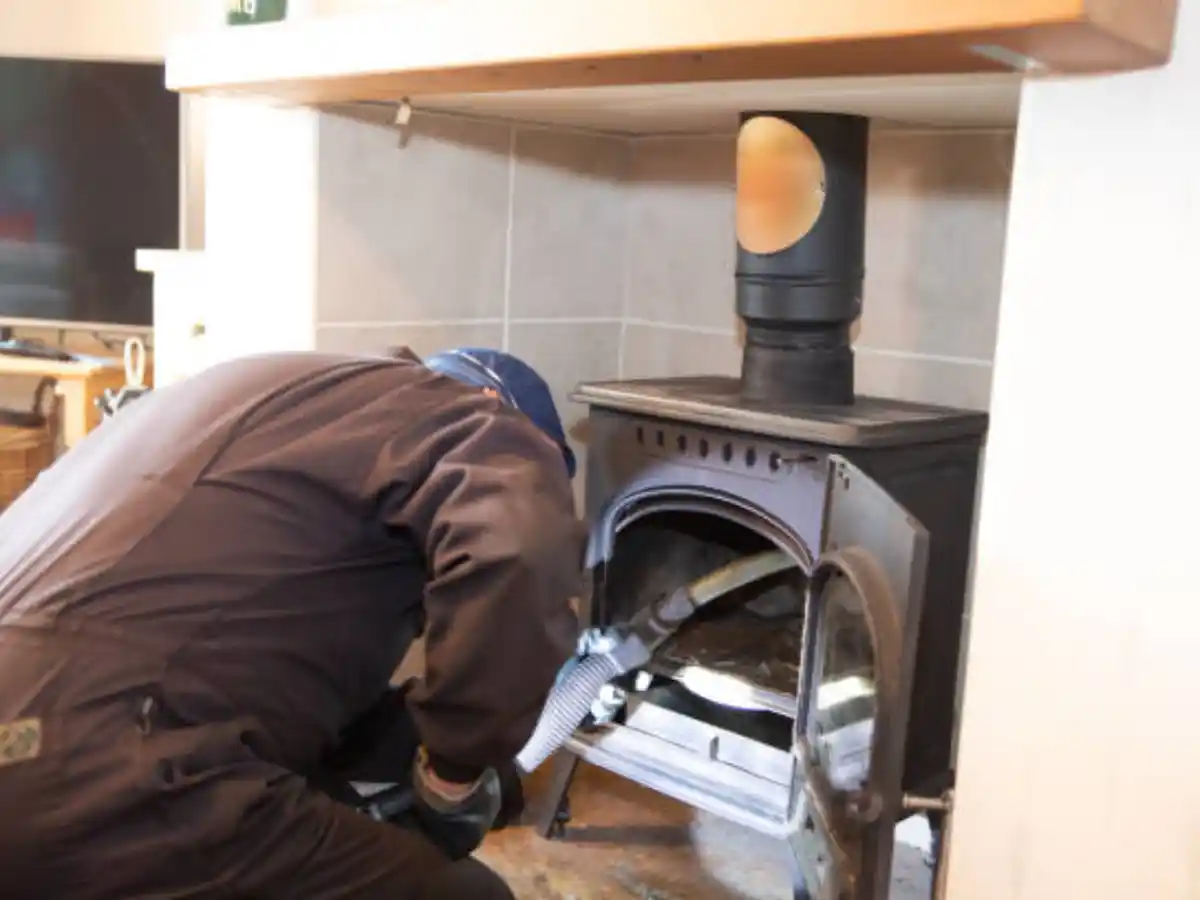
Sweeping does stir up soot, so the tech lays drop cloths around the hearth and runs a vacuum while brushing. The fireplace opening is covered to keep dust inside the flue. When the work is done, the area is vacuumed again before the tech packs up. Moving rugs and furniture a few feet back helps.
Repairs & masonry
How can I tell if my chimney was damaged in an earthquake?
From the ground, look for cracks at the roofline, a stack that leans or twists, missing or loose brick and a gap where the chimney meets the house wall. Inside, check the firebox for fallen mortar or brick. Federal guidance notes that the section above the roof is the most vulnerable. If anything looks off, stop using the fireplace and have it checked.
My crown has cracks. Does that matter?
The crown is the slab around the flue at the very top, and its job is to shed water off the stack. A crack lets rain soak into the brick and the flue area below, which loosens mortar and can stain ceilings. Small cracks can often be sealed; a crown that's crumbling or built flat may need a new crown.
Why is my chimney leaking only in the first storms of the season?
Long dry months shrink and crack sealant, and debris builds up behind the stack. When the first heavy rain comes, every weak point gets tested at once. The common sources are failed flashing, a cracked crown, a missing cap and open mortar joints. Tracing the stain inside back to its source on the roof tells us which one to fix.
Who decides what repairs get done?
You do. The tech explains what was found, shows photos where it helps, and separates what needs attention now from what can be watched. Nothing starts until you choose. If you'd like time to think it over or talk with family, that's fine; the findings will still be there when you call back.
Gas fireplaces & caps
Do gas logs and inserts need chimney service?
Gas burns cleaner than wood, but the venting still matters. Nests, debris and a corroded cap can block the flue, and an insert's liner or vent connections can loosen or rust. Gas log sets in a fireplace depend on the chimney to carry exhaust out, including carbon monoxide. NFPA 211 includes vents in its annual inspection recommendation, so gas setups get checked too.
Why is the damper clamped open on my gas fireplace?
Vented gas logs produce more carbon monoxide than a normal gas burner, and if the damper closed while they were lit, that gas could spill into the room. Installation rules for these appliances call for the damper to be removed or permanently fixed open to the size the manufacturer specifies. That clamp is a safety device, so please leave it in place.
Does California require a spark arrestor on a wood-burning fireplace?
Under the California Residential Code, a chimney serving a fireplace or wood-burning appliance must have an approved spark arrestor, with a removable screen that stays accessible for cleaning. Beyond the code, it's practical here: on Santa Ana wind days, the mesh keeps embers from leaving the flue. Local fire departments may add their own rules, especially near open hillsides.
What does salt air do to a chimney cap?
Moist, salty coastal air speeds up corrosion on metal parts that sit outside all year. A cap can rust through at the mesh or the mounting legs, and a metal chase top can pit and start to hold water. We check the cap, the screen and the fasteners on every roof visit and explain cap replacement options if the metal has failed.
Can a bird or animal really get into my chimney?
Yes, especially in fireplaces that sit unused for months. Birds build nests on smoke shelves and dampers, and small animals use open flues for shelter. A nest blocks exhaust, which is a real problem for gas logs. A properly fitted cap with mesh keeps animals out. If you hear noises in the flue, avoid lighting a fire and call so we can check.
Call us at (949) 353-6287 and a technician will answer it directly.
Still have a question?
Ask a tech on the phone.