Top of the stack
Chimney cap installation and spark arrestor screens
- Mesh sized to code openings
- Measured to your flue
- Options explained first
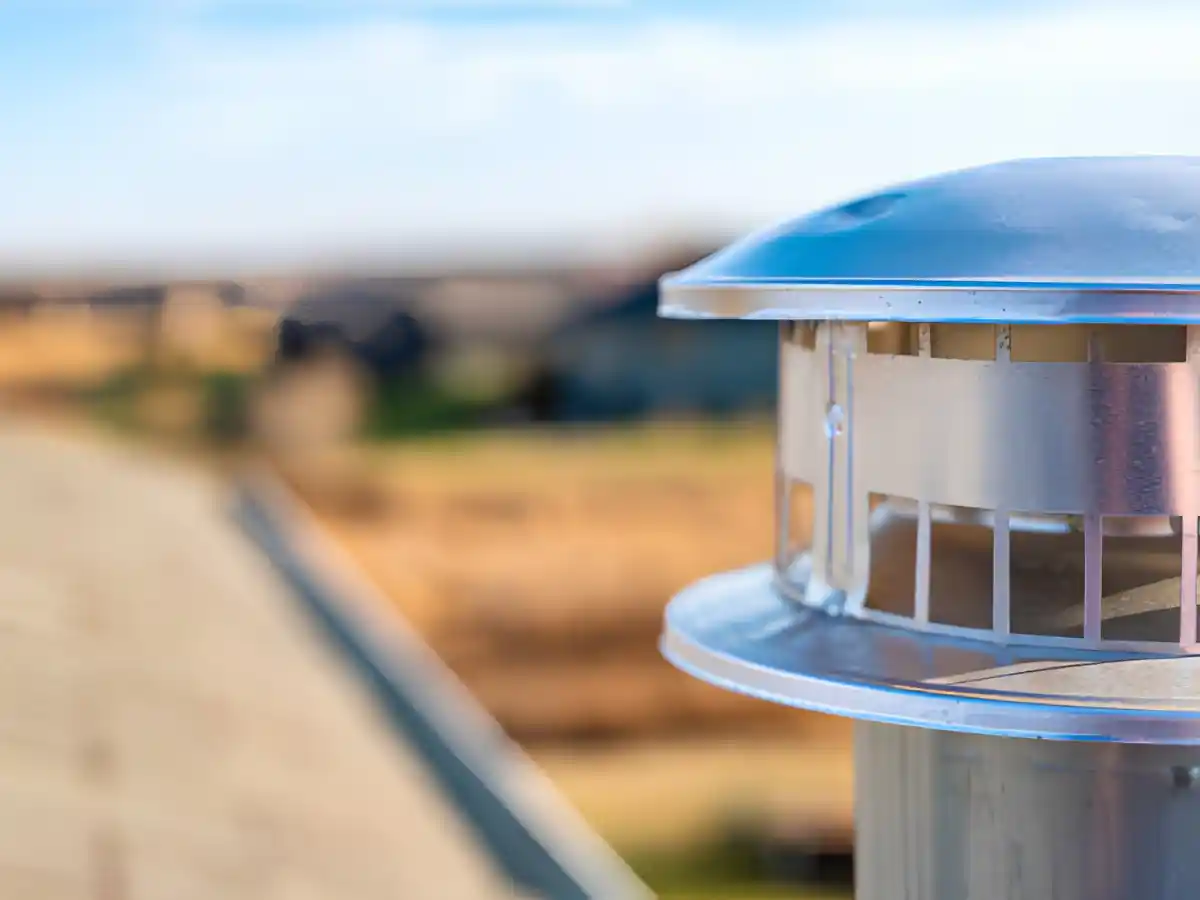
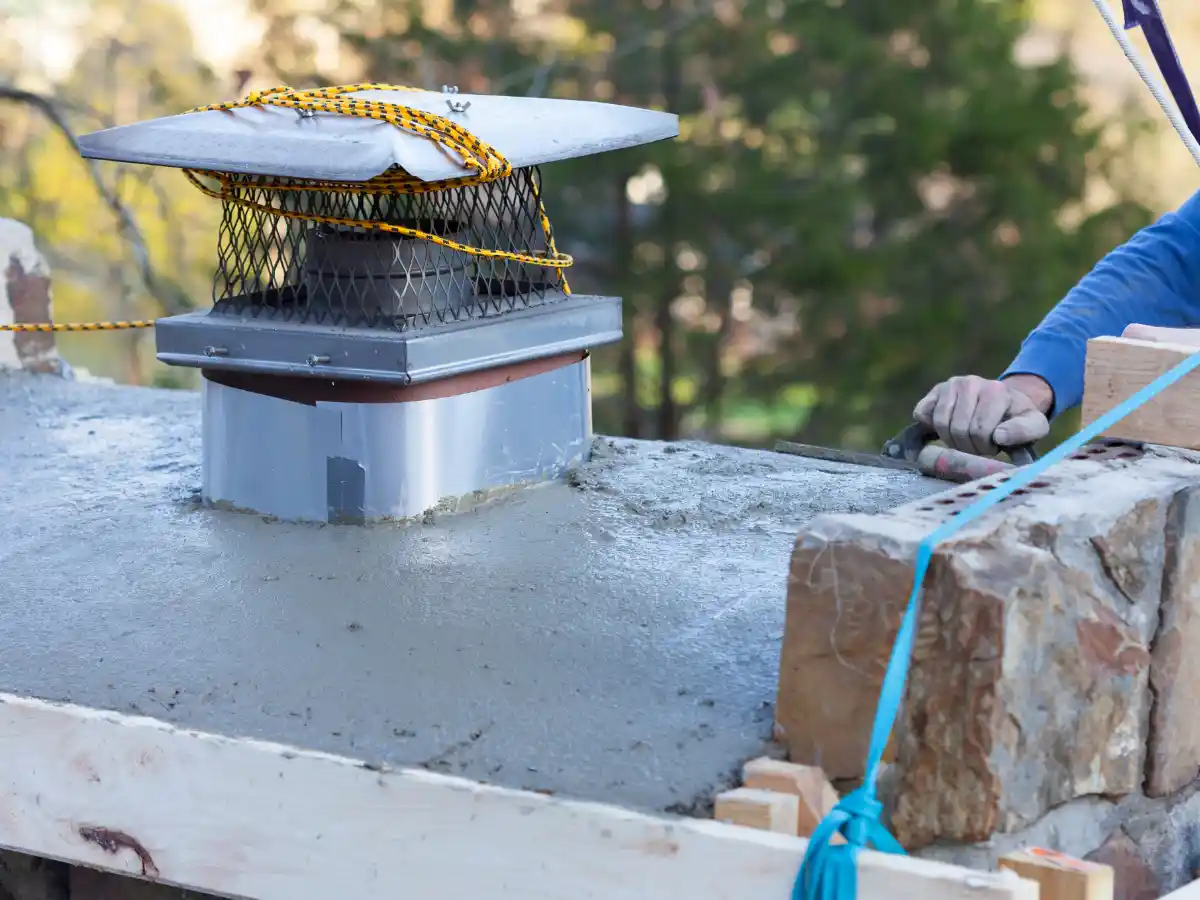
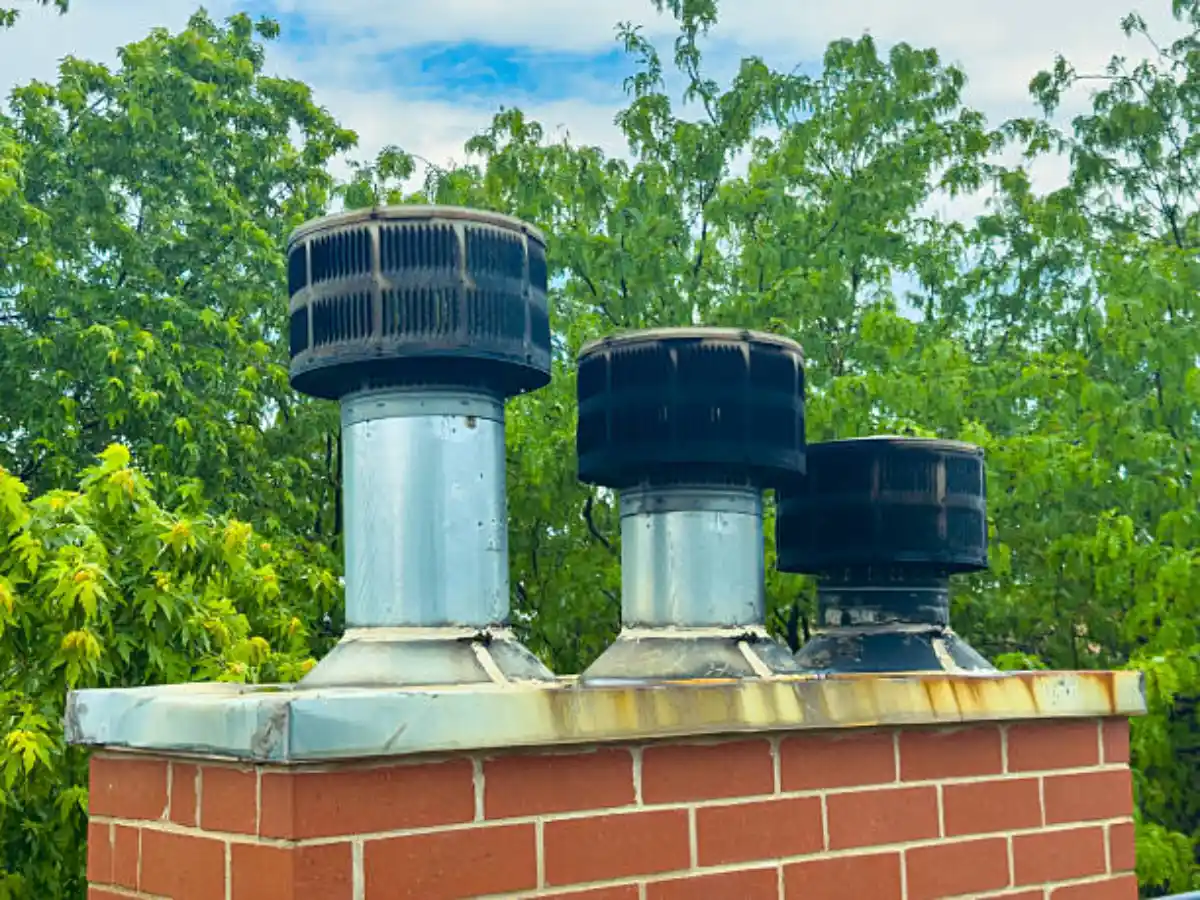
What is sitting on top of your chimney right now? Chimney cap installation puts a hood and a wire screen over the flue outlet, keeping rain, birds and leaves out and holding embers in. On a wood-burning fireplace that screen is a spark arrestor, and California's building code requires one. A cap also protects the concrete crown and flue tiles beneath it from the worst of the weather.
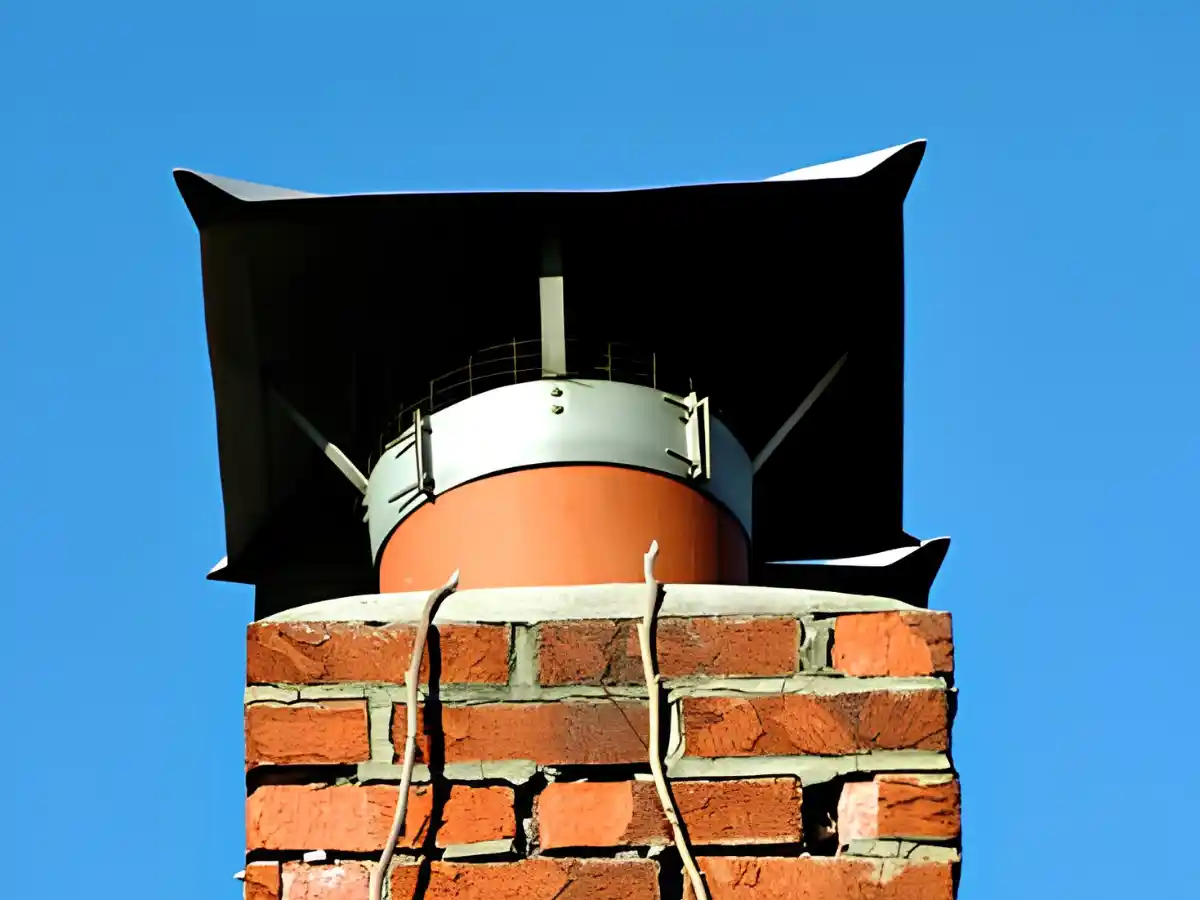
Many caps here were never installed, blew off in a Santa Ana wind or have rusted out from salt air near the coast. A missing screen is easy to overlook from the street, but it matters on dry, windy days, when a stray ember from your own fire can land on a roof or a hillside of dry brush. The fix is usually a single trip up the roof.
Missing or rusted cap?
Call Sunday through Friday and we'll schedule a tech to measure the flue and show you the options.
What the code says about spark arrestors
These figures come from the California Residential Code (section R1003.9.2) and the matching California Building Code section. Your city or fire district may add its own rules on top.
| Requirement | What it means on the roof | Why |
|---|---|---|
| Required on solid-fuel chimneys | Any chimney serving a wood-burning fireplace or stove needs an approved spark arrester | Keeps burning embers from leaving the flue |
| Openings no larger than 1/2 inch | The mesh must stop a 1/2-inch sphere | Bigger gaps let embers through |
| Openings no smaller than 3/8 inch | The mesh can't be so fine it chokes the draft | Too-fine screen clogs with soot and creosote |
| Net free area at least 4× the flue outlet | The screened area has to be much larger than the flue opening | So the screen doesn't restrict exhaust |
| Removable for cleaning | The cap or screen must come off so the flue can be swept | A fixed screen blocks sweeping |
How a cap goes on
A typical installation follows these steps.
Measure the flue and crown
The tech measures the outside of each flue tile, or the whole crown if one cap will cover several flues, and notes how much height clears the top.
Check what's underneath
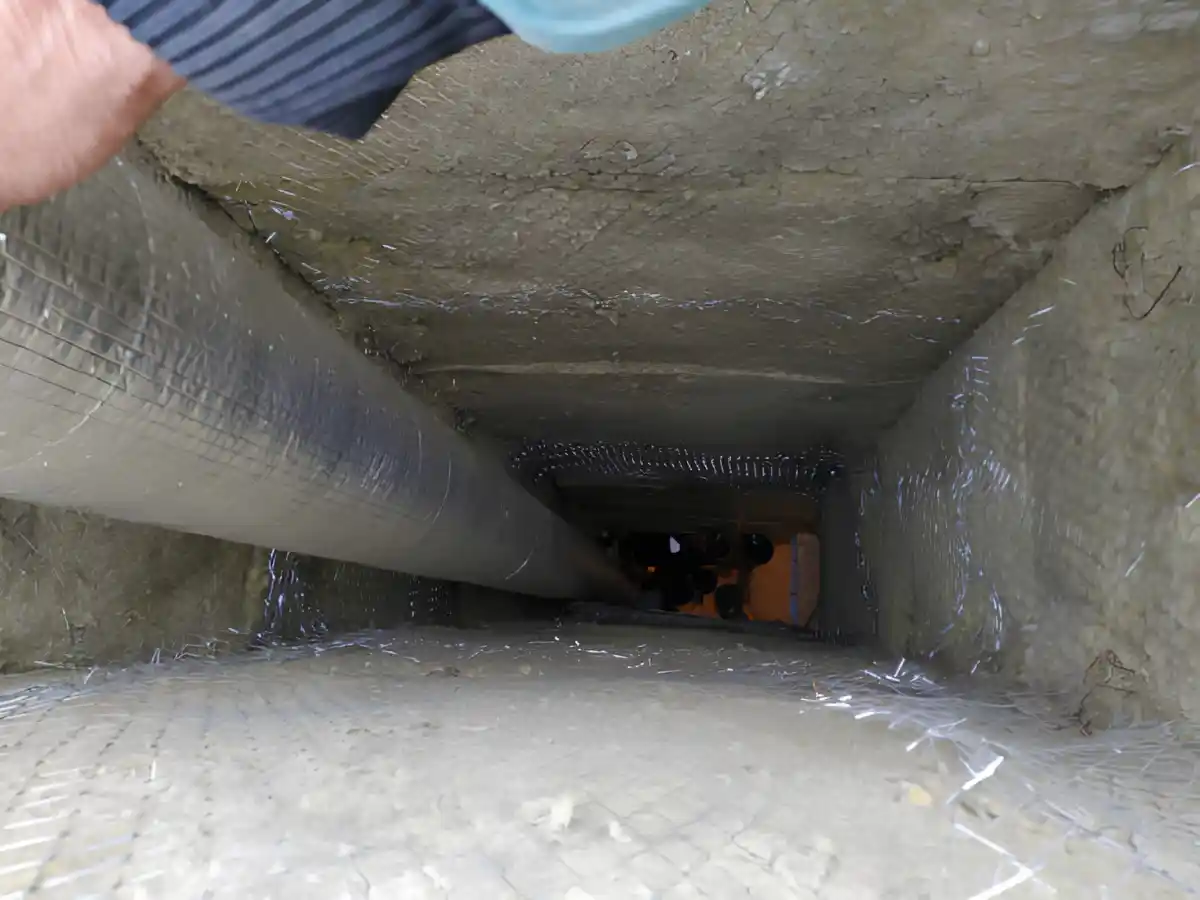
Before anything is mounted, the crown, flue tile and mortar are looked at. A cap bolted onto a cracked crown only hides a repair that still needs doing.
Pick the cap and mesh
Single-flue or multi-flue, stainless or another corrosion-resistant metal, with screen openings in the code range. You see the options and choose.
Fasten and confirm clearance
The cap is secured to the flue tile or crown so wind can't lift it, and the tech checks that the screen is clean, removable and not crowding the draft.
Safety first. On Red Flag Warning days, burning a wood fire is risky even with a cap in place. Embers can still escape a damaged or rusted screen, and strong winds carry them a long way. Check that the arrestor mesh is intact and free of holes before the dry season, and skip the fire entirely if your area is under a burn restriction.
Choosing a cap
The right cap depends on the chimney, the fuel and how close you are to the ocean.
Single-flue cap
Clamps or screws onto one flue tile. It's the common choice for a masonry chimney with one fireplace flue and a crown in good shape.
Multi-flue or crown-mount cap
Covers the whole crown when there are two or more flues, such as a fireplace plus a furnace or water heater vent. It also shields more of the crown from rain.
Chase top and cap for prefab chimneys
Factory-built fireplaces often have a framed chase with a metal top pan. Near the coast those pans rust and pool water, so the tech checks the pan along with the cap.
Gas appliances
A gas fireplace or insert usually has its own listed termination cap from the vent maker. Swapping it for a generic cap can affect venting, so the tech checks what the appliance calls for.
What drives the cost
Price depends on the cap size and material, the number of flues covered, and the roof. A low-pitch single-story roof is quick; a steep tile roof on a hillside lot takes more time and care to walk without cracking tiles. Custom-sized caps for unusual crowns cost more than stock sizes.
If the crown underneath is cracked or the flue tile is broken, that repair comes first, and the tech will lay out both pieces separately so you can decide. Pairing the cap with a sweep is common, since the flue is open and the tech is already on the roof.
What to expect from us
Code-sized mesh
Screens are picked so no gap passes a half-inch ball, none blocks a three-eighths one, and the open area comfortably exceeds the flue outlet.
You decide on the cap
The tech explains what's on the roof now, what a new cap would change and any crown issues seen, then you choose.
One number, two offices
The same line rings through to our Laguna Niguel and Rancho Palos Verdes offices from early morning to late evening, closed only on Saturdays.