 California Chimney Service
Is the screen on top of your chimney actually doing anything? On many local roofs it is rusted, clogged with soot, bent by a branch, or missing a side. Below we cover what the screen is for, what California code says about it, and how a tech decides whether yours still works.
What does a spark arrestor do?
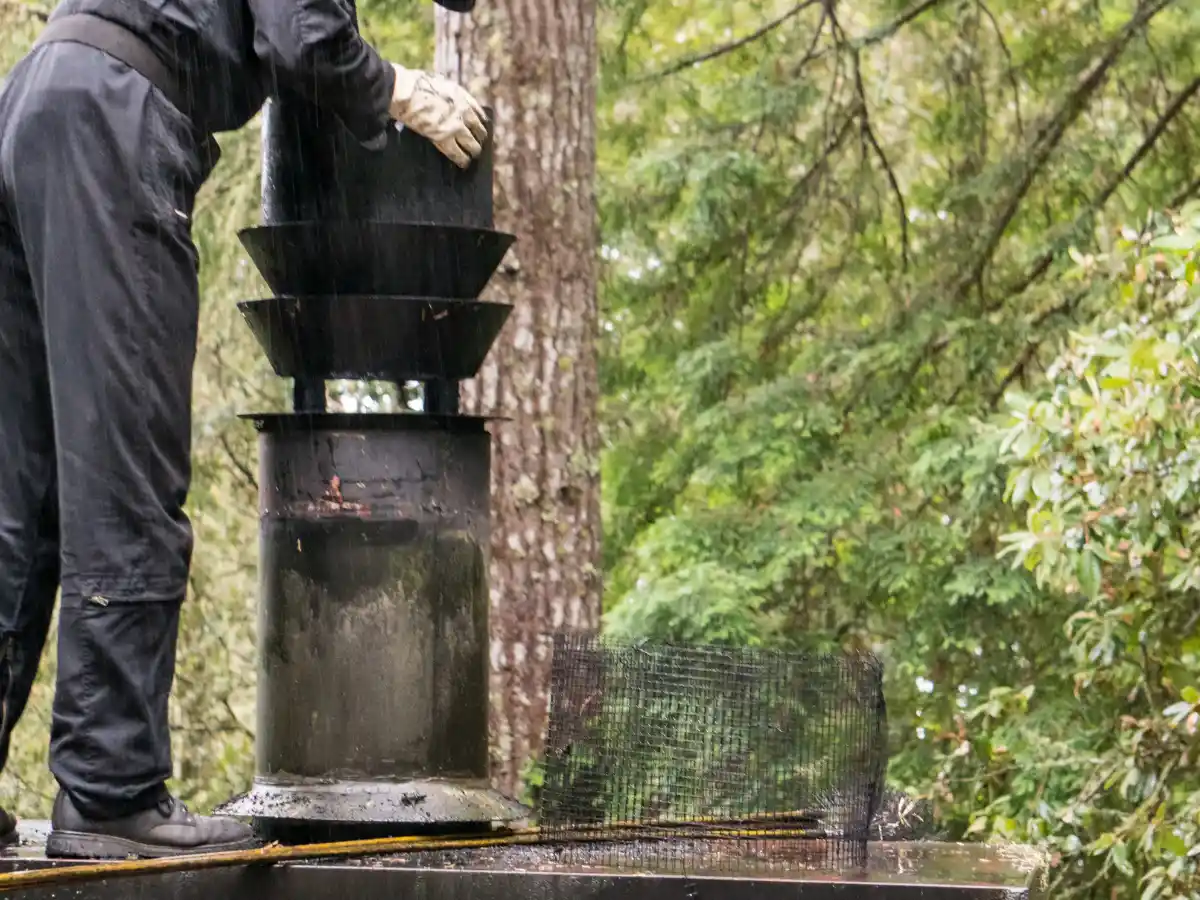
Picture the top of the flue on a night you burn oak. Hot fragments of bark and charcoal ride the draft upward. Without a screen, some of them land on your roof, in rain gutters full of dry leaves, or on the slope behind the house. A spark arrestor is a metal mesh enclosure over the flue outlet that catches those fragments and lets them burn out before they escape.
The same mesh works in reverse. During a wildfire, wind carries embers ahead of the flames, and an open flue is one more gap in the house. The Newport Beach Fire Department notes that embers can travel up to five miles ahead of a wildfire and enter through a chimney.
- Outbound: keeps sparks from your own fire off the roof and yard.
- Inbound: helps stop wind-blown embers from dropping down the flue.
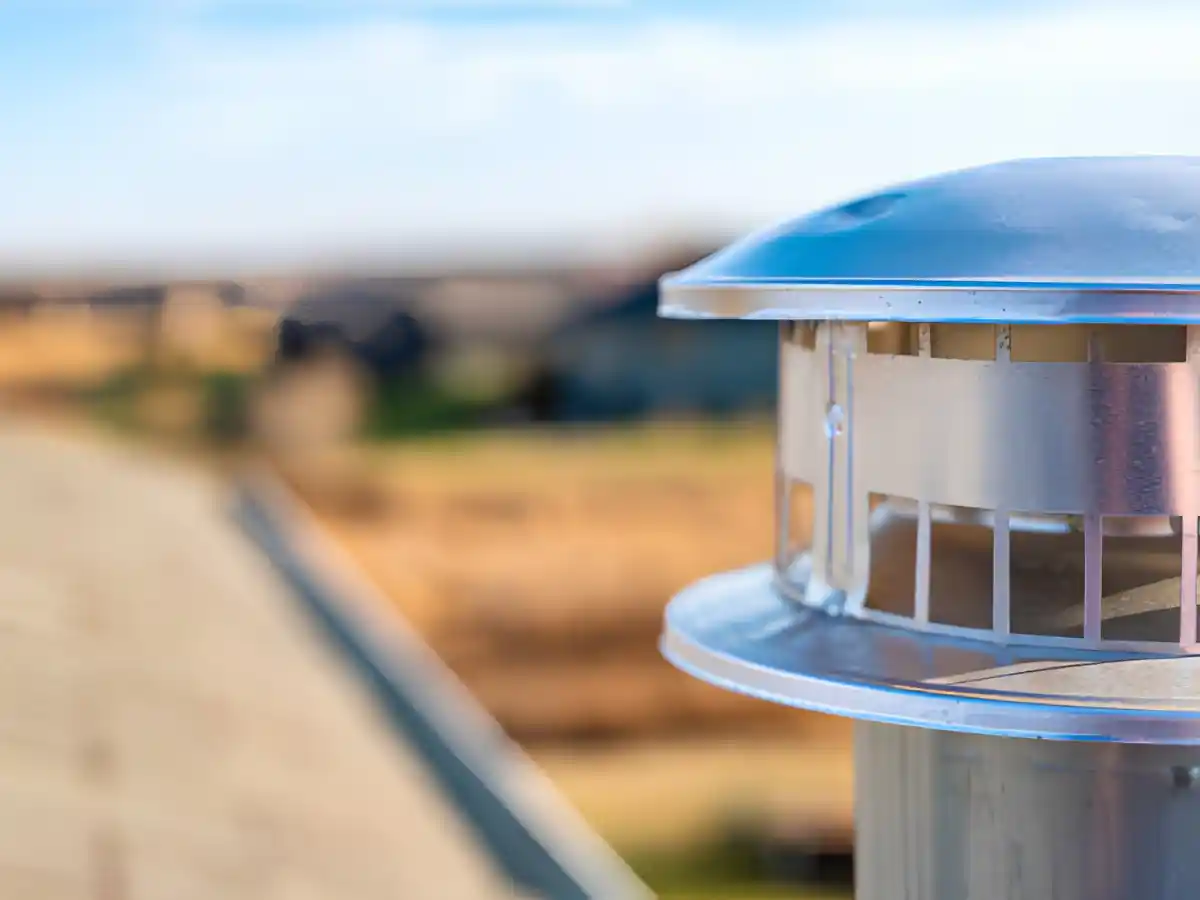
- Side benefits on a full cap: a hood that sheds rain and a barrier against birds and raccoons.
What California code says about the screen
State residential code, in R1003.9.2, calls for an approved spark arrester on every chimney attached to an appliance or fireplace that burns solid fuel. The CAL FIRE low-cost retrofit list gives homeowners the same screen range. Cities can add their own rules, so it is worth asking your local building or fire department too.
| Point | What the rule says | Where it comes from |
|---|---|---|
| Which chimneys | Any chimney serving a solid-fuel appliance or fireplace | California Residential Code R1003.9.2 |
| Opening size | Must stop a sphere larger than 1/2 inch, must not block one smaller than 3/8 inch | California Residential Code R1003.9.2 |
| Screen area | Net free area at least four times the net free area of the flue outlet | California Residential Code R1003.9.2 |
| Material | Heat and corrosion resistance equal to 12-gauge wire, 19-gauge galvanized steel or 24-gauge stainless | California Residential Code R1003.9.2 |
| Cleaning access | Screen or cap has to be removable for flue cleaning | California Residential Code R1003.9.2 |
| Homeowner retrofit | Noncombustible, corrosion-resistant metal mesh with 3/8 to 1/2 inch openings | CAL FIRE Low-Cost Retrofit List |
Notice the floor on opening size. Mesh finer than 3/8 inch sounds safer but plugs with soot and creosote quickly, which chokes the draft and can push smoke back into the room.
Why wind days change the math
Santa Ana winds are offshore desert winds that pour through mountain passes toward the coast, mostly in autumn. They often bring the lowest humidity of the year to coastal Southern California and are a major driver of large wildfires in the region. Dry brush on hillsides and canyons near homes in south Orange County and on the Palos Verdes Peninsula sits right in that wind path.
On those days a damaged screen is a real gap rather than a cosmetic one. If you plan to light a wood fire during an autumn wind event, check your city's fire department advisories first; many residents simply skip the fire until the wind drops.
How salt air and soot wear a cap down
Near the ocean, the marine layer leaves a film of salty moisture on metal almost every morning. Galvanized mesh tends to rust first at the welds and at the bolts that clamp it to the flue tile. Once a strand breaks, the gap grows. Soot adds a second problem from the inside: a mesh caked with buildup still looks like a screen from the street, yet it no longer breathes.
- Rust streaks running down the crown or the chase top
- Holes or broken strands you can see from the ground with binoculars
- A cap tilted or loose after a windstorm
- Smoke rolling into the room even with the damper fully open
- Bird or rodent noise inside the flue
What a tech checks on the roof
- Mesh openings measured against the 3/8 to 1/2 inch range.
- Screen area compared to the size of the flue it covers.
- Rust, broken welds and loose clamps or set screws.
- Soot and creosote packed into the mesh from the inside.
- Whether the cap fits each flue on a multi-flue chimney.
- The crown under the cap, since cracks there let water in around the flue tile.
Findings are explained before any work is chosen. Sometimes cleaning the mesh during a chimney sweep is all it needs; sometimes a corroded cap is past saving and a new cap with a spark arrestor is the better choice. If the crown below is cracked, crown repair may come up as well. You decide.
Tile and steep roofs are slippery, and loose tiles crack under a boot. Never pull a clogged screen off to improve draft; an open flue on a wind day is exactly what the screen is meant to prevent. Clean or replace it instead.
Need it fixed?
Chimney Cap Installation across Orange County and the South Bay
Tell us what you noticed by phone or the form, and we'll set a time to look.
Frequently asked questions
Does a gas fireplace need a spark arrestor?
The California Residential Code rule covers chimneys attached to solid-fuel appliances and fireplaces, such as wood burners. Gas appliances follow their own venting instructions, which usually specify a listed termination cap. If a masonry chimney was converted to gas logs, the existing screen often stays in place, and it is worth keeping it clean so the flue can still breathe.
Can I use window screen or hardware cloth as a spark arrestor?
No. Window screen is far finer than the 3/8 inch minimum and plugs with soot, and light hardware cloth corrodes and may not meet the material requirement. A purpose-made arrestor sized to the flue is the safer route.
How do I know if my cap is too clogged?
Smoke spilling into the room, a fire that is hard to start, or a visible black crust on the mesh are common clues. During an annual chimney inspection, the tech looks at the screen from the roof and from below.
Is a spark arrestor the same as a chimney cap?
Not always. A spark arrestor is the mesh. Many caps combine that mesh with a rain hood, but some older chimneys have a hood with no screen, and some have a bare screen with no hood.